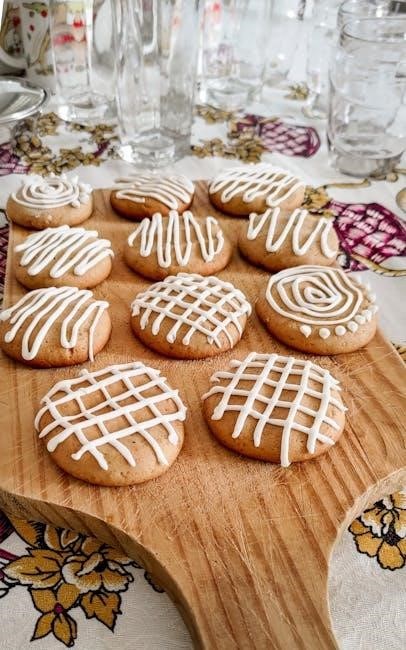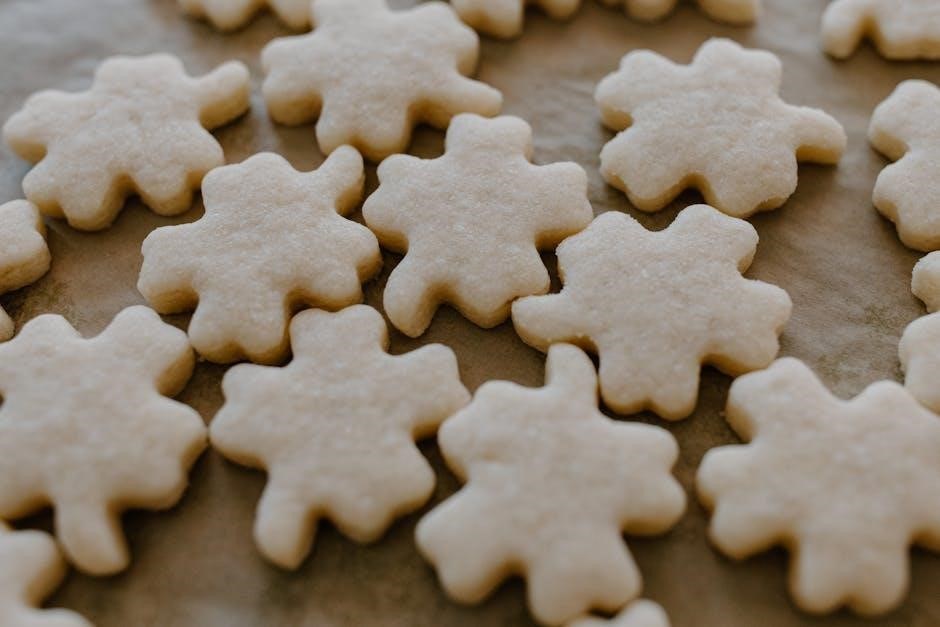
GFS Sugar Cookies Baking Instructions: A Comprehensive Guide
Navigating the delightful world of GFS sugar cookies requires understanding temperature, timing, and thickness for optimal results, especially when recreating cherished holiday traditions.
Understanding GFS Sugar Cookies & Alternatives
GFS (Gordon Food Service) frozen sugar cookies offer a convenient base for holiday baking, particularly for those missing Midwestern traditions after relocation, like a move to California. They are prized for their ease and delicious flavor, simplifying the process of creating festive treats. However, accessibility can be a challenge depending on location, prompting a search for viable alternatives.
These cookies are a pre-made solution, eliminating the need for extensive dough preparation. When GFS cookies aren’t available, exploring store-bought options or crafting homemade recipes becomes necessary. Understanding the characteristics of GFS cookies – their texture and taste – helps in replicating similar results with alternatives, ensuring continued enjoyment of beloved holiday flavors and traditions.
The Nostalgia Factor: Recreating Holiday Traditions
For many, holiday cookies aren’t just a treat; they’re a powerful link to cherished memories and family traditions. The longing for familiar flavors, especially after a significant life change like moving across the country, is deeply relatable. Recreating those experiences, like the simple joy of baking and decorating with children, becomes paramount.
GFS sugar cookies often hold a special place in these traditions, representing ease and consistent quality. When those aren’t readily available, the quest to replicate the taste and experience takes on emotional weight. It’s about more than just the cookie itself; it’s about preserving a sense of home and continuity for the family, ensuring those beloved rituals endure.
GFS Cookie Characteristics: Texture & Taste
GFS sugar cookies are renowned for their consistent, soft texture – a key element driving the desire to find suitable alternatives. Many bakers prefer a softer cookie, even enjoying them the day after baking, akin to a chocolate chip cookie’s improved flavor with time. Achieving this softness hinges on precise baking times and temperatures.
The cookies typically offer a delicate sweetness, providing a perfect canvas for frosting and decorations. The texture isn’t overly crisp, allowing for easy biting and a melt-in-your-mouth experience. Replicating this requires careful attention to dough handling and avoiding overbaking, which can lead to a harder, less desirable result.
Dough Preparation & Handling
Successful GFS sugar cookie replication begins with proper dough preparation. The dough needs to be handled gently to maintain its tenderness. When rolling, a lightly floured surface is essential to prevent sticking, ensuring clean cuts with cookie cutters. Consistency is key; avoid overworking the dough, as this can develop gluten and result in tougher cookies.
Many bakers recommend chilling the dough before rolling, which firms it up and makes it easier to work with. Proper handling also extends to portioning – ensuring even thickness is crucial for uniform baking. Remember to maintain a cool environment during preparation to prevent the dough from becoming too soft and sticky.
Rolling Out the Dough: Thickness Considerations (1/4 inch vs. 1/8 inch)
The thickness of your rolled dough significantly impacts the final texture of GFS-style sugar cookies. A 1/4-inch thickness yields a softer, chewier cookie, ideal for those who prefer a more substantial bite. However, this thickness requires slightly longer baking times to ensure thorough cooking without burning.
Conversely, rolling the dough to 1/8 inch results in a crispier, more delicate cookie. This thinner profile bakes faster, making it perfect for intricate designs or those who enjoy a snap with each bite. Many bakers prefer the 1/8-inch option, finding it closer to the original GFS texture. Experimentation is encouraged to discover your preferred consistency!
Cookie Cutter Selection & Usage
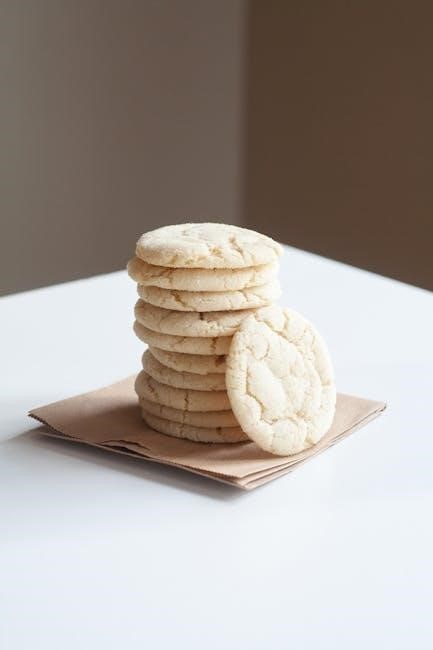
Choosing the right cookie cutters is crucial for festive GFS sugar cookies! Metal cutters generally provide cleaner edges compared to plastic, especially for intricate designs. Dip the cutter in flour before each press to prevent sticking and ensure a crisp shape. Press firmly and straight down – avoid twisting, which can distort the cookie’s form.
Consider the size of your cutters in relation to baking sheet space; remember to leave approximately 1 inch between each cookie. For detailed cutters, gently tap the cutter on the counter to release the dough. Don’t re-roll scraps excessively, as this can develop gluten and result in tougher cookies.
Arranging Cookies on Baking Sheets: Spacing Guidelines (1 inch apart)
Proper arrangement on baking sheets is vital for even baking of GFS sugar cookies. Maintaining a 1-inch space between each cookie allows for adequate heat circulation, preventing them from merging during baking. Avoid overcrowding the sheet; it’s better to bake in batches. Ungreased baking sheets are recommended to maintain shape.
Consider the cookies’ expansion during baking – they may spread slightly. Arrange similar-sized cookies together for consistent results. If using multiple baking sheets, rotate them halfway through baking for even browning. Lining sheets with parchment paper isn’t essential but aids in easy removal.
Baking Temperature & Time: A Detailed Breakdown
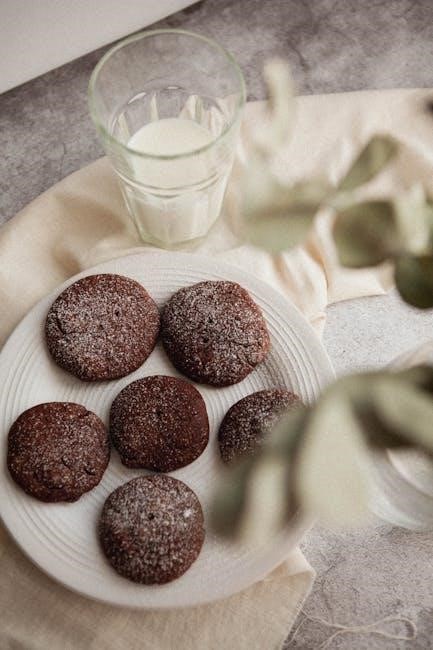
Achieving the perfect GFS sugar cookie texture hinges on precise baking temperature and time control. Experiments reveal significant differences based on oven heat. A lower temperature of 185°C (365°F) yields a softer, chewier cookie, while 205°C (401°F) produces a slightly crisper edge. Higher, at 225°C (437°F), results in faster browning but requires careful monitoring to prevent burning.
Baking times vary: 6 minutes for softer cookies, and 12 minutes for golden-brown, firmer results. Adjustments are key; personal preference dictates the ideal bake. Consistent oven temperature is crucial for predictable outcomes.
Baking at 185°C (365°F): Results & Texture
Baking GFS sugar cookies at 185°C (365°F) prioritizes a soft, tender texture, reminiscent of a classic, melt-in-your-mouth experience. This lower temperature encourages even cooking without rapid browning, resulting in a pale golden hue. The cookies retain a noticeable chewiness, appealing to those who prefer a less crisp bite.
Expect a slightly longer bake time compared to higher temperatures, typically around 6-8 minutes, depending on dough thickness. Monitoring is still essential to prevent underbaking. This temperature is ideal for recreating the nostalgic softness many associate with holiday cookies.
Baking at 205°C (401°F): Results & Texture
Baking GFS sugar cookies at 205°C (401°F) yields a cookie with a slightly crisper edge while maintaining a soft center. This temperature provides a balance between chewiness and snap, resulting in a more defined texture contrast. The cookies will exhibit a more noticeable golden-brown color, indicating a quicker baking process.
A bake time of approximately 6-10 minutes is typical, requiring close observation to prevent burning, especially around the edges. This temperature is a good compromise for those desiring a cookie that isn’t overly soft but isn’t entirely crisp either.
Baking at 225°C (437°F): Results & Texture

Baking GFS sugar cookies at 225°C (437°F) produces a cookie with a noticeably crispier texture throughout. This higher temperature accelerates the baking process, leading to a more uniformly golden-brown appearance and a slightly drier crumb. Expect a more pronounced snap when biting into these cookies.
Baking times are significantly reduced, often requiring only 5-8 minutes. Vigilance is crucial to prevent burning, as the cookies can quickly go from golden to overly browned. This temperature is ideal for those who prefer a very crisp, almost shortbread-like sugar cookie.
Optimal Baking Time: 6 Minutes vs. 12 Minutes
The ideal baking time for GFS sugar cookies hinges on desired texture; 6 minutes yields a softer, chewier cookie, while 12 minutes results in a golden, firmer bite. A 6-minute bake maintains significant softness, appealing to those who enjoy a melt-in-your-mouth experience, similar to a freshly baked, slightly underdone cookie.
Conversely, a 12-minute bake ensures thorough cooking, creating a crispier edge and a more stable structure, perfect for decorating. Some bakers prefer this longer bake, enjoying the cookies the next day, finding the flavor develops overnight. Monitoring is key, as ovens vary.
Achieving Desired Softness: Baking Time Adjustments
To maximize softness in GFS sugar cookies, precise baking time control is crucial. Reducing baking time slightly below the recommended 6-12 minutes can yield exceptionally tender results. However, underbaking risks a fragile cookie prone to breaking. Experimenting within a 30-second to 1-minute window is advisable, observing the edges for a pale golden hue rather than a deep brown.

Consider lowering the oven temperature by 25°F (14°C) for a more gentle bake, further preserving softness. Remember, carryover cooking continues after removing the cookies from the oven, so err on the side of slightly underbaked.
Cooling & Storage
Proper cooling and storage are vital for maintaining the quality of your GFS sugar cookies. Allow cookies to cool completely on the baking sheet for several minutes before transferring them to a wire rack. This prevents breakage due to residual warmth. Ensure complete cooling before storing, as trapped moisture can lead to sogginess.
For short-term storage (up to 3 days), an airtight container at room temperature is ideal. For longer preservation (up to a month), freeze cookies individually wrapped or in a freezer-safe container. Properly stored, GFS sugar cookies retain their delightful texture and flavor;
Cooling Process: Ensuring Complete Cooling
A gradual cooling process is crucial for achieving the perfect GFS sugar cookie texture. Immediately after removing from the oven, let the cookies rest on the baking sheet for approximately 2-3 minutes. This initial cooling phase allows them to firm up slightly, minimizing the risk of crumbling during transfer.
Carefully move the cookies to a wire rack to allow air circulation around all surfaces. Complete cooling can take 30-60 minutes. Resist the urge to stack warm cookies, as this traps steam and results in a softer, potentially sticky texture. Patience ensures a delightful, structurally sound cookie!
Storage Options: Maintaining Freshness
Proper storage is key to preserving the delightful taste and texture of your GFS sugar cookies. For short-term storage (up to 3 days), an airtight container at room temperature is ideal. Layer cookies between sheets of parchment paper to prevent sticking.
For longer preservation – extending up to a month – consider freezing. Arrange cooled cookies in a single layer on a baking sheet and freeze until solid. Then, transfer to a freezer-safe bag or container. This prevents clumping. Properly stored, these cookies remain a delicious treat, bringing back nostalgic holiday flavors!
Troubleshooting Common Issues
Baking GFS sugar cookies isn’t always seamless; here’s how to address common problems. If cookies spread too thin, the dough may be too warm or overmixed – chill the dough longer and avoid excessive handling. Burning often results from inaccurate oven temperature or overbaking; verify your oven’s calibration and reduce baking time.
Uneven baking can stem from hot spots in your oven; Rotate the baking sheet halfway through. Remember, baking time preferences vary; some prefer 6 minutes for softer cookies, while 12 minutes yields a golden, crispier result. Adjust to your desired texture!
Cookies Spreading Too Thin: Causes & Solutions
Excessive spreading is a frequent issue with GFS sugar cookies, but easily remedied. The primary culprit is often dough that’s too warm; butter softens quickly, leading to a flatter cookie. Thoroughly chill the dough for at least 30 minutes, or even longer, before rolling. Overmixing the dough also develops too much gluten, contributing to spread.
Ensure you’re not working the dough excessively during handling. Use a lightly floured surface and gentle pressure when rolling to 1/4 or 1/8 inch thickness. Baking on a parchment-lined sheet can also help. If spreading persists, briefly chill cut cookies before baking.
Cookies Burning: Prevention & Correction
Preventing burnt GFS sugar cookies hinges on accurate oven temperature and vigilant monitoring. While baking at higher temperatures (205°C/401°F or 225°C/437°F) yields quicker results, they demand closer attention. Ensure your oven is properly calibrated; an oven thermometer is invaluable. Lower baking temperatures (185°C/365°F) offer a more forgiving margin.
If cookies begin to brown too quickly, immediately reduce the oven temperature by 25°F. Rotating the baking sheet halfway through baking promotes even cooking. If cookies do burn, carefully remove them, discarding the burnt ones. For slightly browned edges, gently brush with powdered sugar post-cooling to mask discoloration.
Uneven Baking: Addressing Temperature Variations
Uneven baking in GFS sugar cookies often stems from inconsistent oven temperatures. Hot spots within ovens are common; rotating the baking sheet midway through the baking process is crucial for uniform results. Ensure cookies are spaced one inch apart on ungreased sheets to facilitate even heat circulation.
If one side consistently browns faster, consider rotating the baking sheet 180 degrees. An oven thermometer is essential for verifying accurate temperature readings. Experimenting with slightly lower temperatures (185°C/365°F) can provide a more stable baking environment. Consistent dough thickness (1/8 or 1/4 inch) also contributes to even baking.
Beyond GFS: Alternative Sugar Cookie Options

Missing the convenience of GFS sugar cookies? Several alternatives exist! Store-bought refrigerated sugar cookie doughs offer a quick solution, though flavor and texture may differ. Many brands provide pre-cut shapes, simplifying decorating. For a more customized experience, explore homemade sugar cookie recipes.
Adapting these recipes to mimic GFS cookies involves focusing on a slightly denser dough and precise baking temperatures. Experiment with chilling the dough thoroughly before rolling to minimize spreading. Achieving the desired softness often requires shorter baking times (around 6-8 minutes) and careful monitoring. Ultimately, finding the perfect substitute depends on personal preference and baking skill.
Exploring Store-Bought Alternatives
When GFS cookies aren’t accessible, numerous store-bought options provide convenience. Pillsbury and Immaculate Baking Company offer refrigerated sugar cookie doughs, available in various formats – rolled, pre-cut shapes, or even cookie bars. These are readily found in most grocery stores, offering a quick baking solution.
However, be mindful of potential differences in texture and flavor compared to GFS. Some brands spread more during baking, requiring careful spacing on the baking sheet (at least 1 inch apart). Adjust baking times accordingly, starting with 6 minutes and checking for golden edges. Experimenting with different brands will help you discover a suitable substitute for your holiday traditions.
Homemade Sugar Cookie Recipes: A Starting Point
For those seeking a from-scratch experience, numerous sugar cookie recipes can mimic the GFS taste and texture. Basic recipes typically involve butter, sugar, eggs, flour, and vanilla extract. Many online resources offer detailed instructions and variations, allowing for customization.
To achieve a similar result to GFS cookies, focus on chilling the dough thoroughly before rolling – this minimizes spreading. Rolling to a 1/4 or 1/8 inch thickness is recommended. Remember the baking temperature considerations: 185°C (365°F), 205°C (401°F), or 225°C (437°F), adjusting time between 6-12 minutes, depending on desired softness and golden color.
Adapting Recipes for Similar Results
Successfully replicating the GFS sugar cookie experience with homemade recipes hinges on understanding key characteristics. GFS cookies are known for their soft texture, achieved through precise baking. When adapting recipes, prioritize ingredients that contribute to tenderness, like using cake flour alongside all-purpose.
Experiment with chilling times – longer chilling minimizes spread. Pay close attention to baking temperature; starting at 185°C (365°F) and observing the cookies’ behavior is crucial. Adjust baking time between 6-12 minutes, aiming for a slightly underbaked center for that signature GFS softness. Don’t hesitate to test small batches!
Resources & Further Information
For direct access to GFS products, visit their online store: GFS Store Link. This provides a convenient way to purchase the original cookies and assess their qualities firsthand. Beyond that, numerous online forums and communities dedicated to baking offer valuable insights and shared experiences.
Explore discussions on sites like Reddit (search for “sugar cookies” or “GFS cookies”) to learn from others’ successes and troubleshoot common issues. Additionally, websites specializing in cookie recipes often feature threads discussing similar frozen cookie alternatives. Remember to check out http://geni.us/t5OKI for Christmas cookie options!
GFS Store Link
Accessing GFS (Gordon Food Service) sugar cookies directly is made easy through their dedicated online storefront. This platform serves as the primary source for purchasing the original frozen cookies, allowing bakers to consistently recreate familiar flavors and textures. The official GFS store link is: https://gfsstore.com/.
Through this link, customers can browse available quantities, review product details, and place orders for delivery. It’s a crucial resource for those specifically seeking the GFS brand to maintain tradition or compare with alternative sugar cookie options. Remember to check for shipping restrictions and availability based on your location.
Relevant Online Forums & Communities
Connecting with fellow bakers online provides a wealth of knowledge and shared experiences regarding GFS sugar cookies. Numerous forums and communities offer tips, troubleshooting advice, and recipe adaptations. These platforms are invaluable for those seeking to perfect their baking process or find alternatives when GFS cookies are unavailable.
While a dedicated GFS cookie forum isn’t readily apparent, general baking communities and holiday recipe groups often feature discussions. Exploring platforms like Reddit’s r/Baking or Facebook groups dedicated to Christmas cookies can yield helpful insights. Sharing experiences and seeking advice from others passionate about sugar cookies fosters a collaborative learning environment.